Skip to content

People-centered Design

  • People
  • Design
  • Business
  • More …
    • Thinking about AI
    • Prototyping UX
  • People
  • Design
  • Business
  • More …
    • Thinking about AI
    • Prototyping UX

What is the role for data and AI?


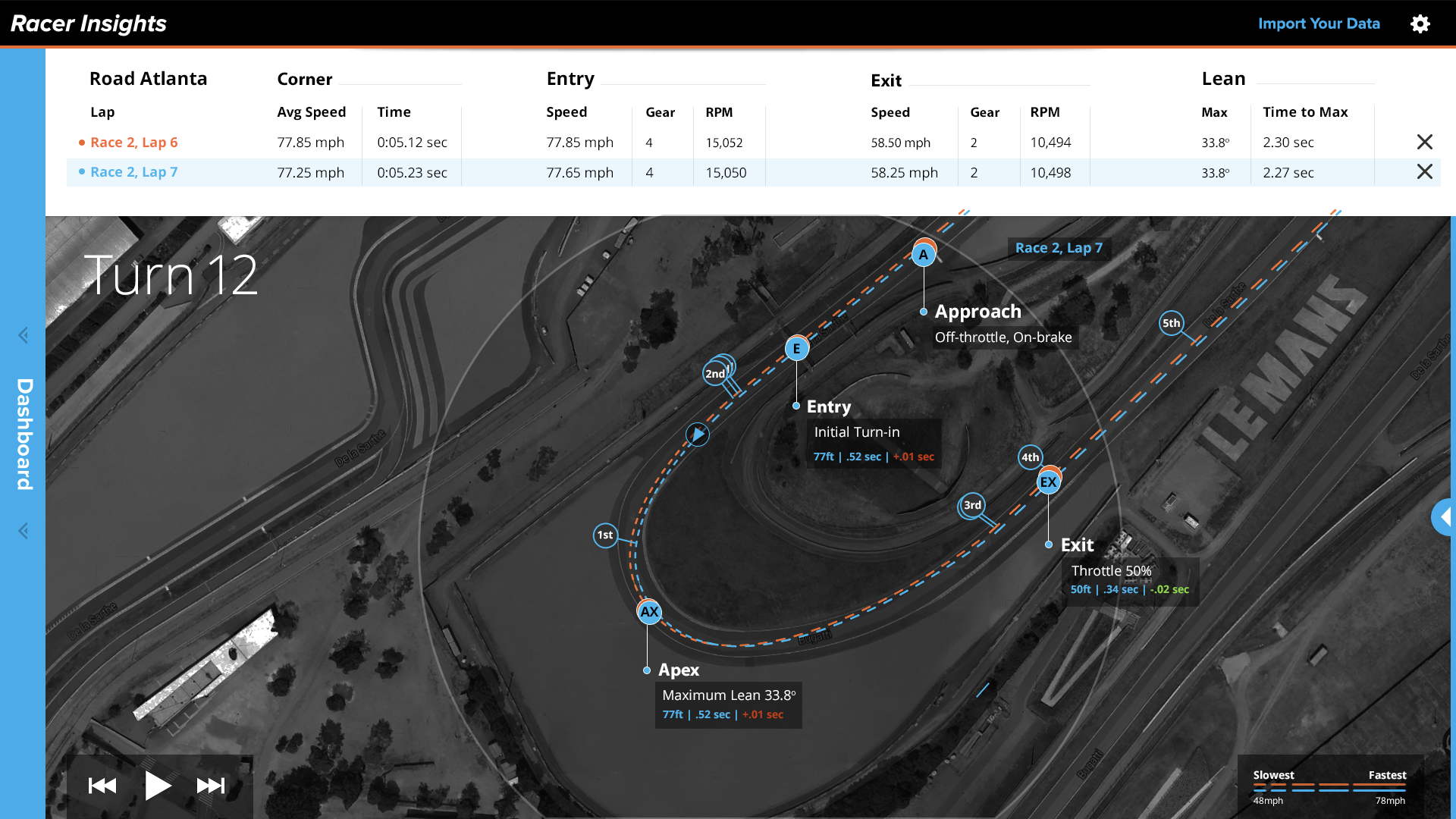
Increasingly the experiences we are designing products for entail the collection and sharing of lots of data. As well as the broader questions about who owns the data, there is also the need for the presentation of data to be designed and it isn’t obvious that traditional design methods address this very well.

Racing data

Kevin Richardson (Infragistics) gave a talk at UCDUK15 about the design of data presentation for motor bike racing, which provided a great example of how having the data is only the starting point of the design process.

UX strategy or Design Strategy?

Brand strategy and design strategy seem to be well understood terms, but the idea of an experience strategy seems to be a step too far for many (is it not just the same as one these other two?).

Maps are Selective

Journey maps, user mapping, and many other methods all aim to produce a map of some facet of the user experience. In this context it is useful to reflect on the fact that 2D representations of a 3D world are always inaccurate – even while being phenomenally useful.

GE Digital Power

In creating digital HMI for a power plant, it is easy to find constraints pulling in different directions – towards simplification of the HMI and the use of fewer, smaller screens, versus the presentation of more data across more, larger screens. Either is a possible experience that can be designed for, but the whole team needs to know which experience they are aiming for.

THE HAZARDS OF USER DATA AND FEEDBACK …

It seems almost sacrilegious to say it, but I think it is really important to maintain significant caution around data obtained from user feedback, testing or group discussions. Too often I hear people proudly say that all their design decisions are based on feedback from users, or one hears leadership asking that all the design decisions be based on documented data from user feedback. These attitudes are, of course, well-founded, but at the same time they are seriously misguided – and for a number of different reasons …

Business and technology

Product design is a complex balancing of conflicting constraints and what works for a product idea in one company might be very different than would work for the same idea in a different company. Given that – does it really make sense to say the design is centred on anything?

Making things better?

Design?

Business and technology

Experience is infinite

Which People?

  • Welcome
  • What’s New?
  • About
  • Welcome
  • What’s New?
  • About

info@peoplecentereddesign.org

© 2026 David Gilmore